Upper Arlington Tree Co. · Arborist & Plant Health Care · Upper Arlington, Ohio — Tree City USA

I keep trees alive.

Boutique, arborist-led plant health care — trees, shrubs, ornamentals, and fruit trees. Trained in old growth and orchard rows. Working your street, reading your soil.

Text David The programs →
Spring

Pest & disease scan.
First feeding goes down.

Now
Summer

Canopy & structure.
Eyes on every leaf.

Enrolling
Autumn

Soil & roots — the best
root season of the year.

Winter

Dormant pruning.
Your report, walked through.

See the full season calendar →
This week in UA Reading this week’s rain… Reading the season’s heat… What’s Active — the full board →
Two programs

Measured, not guessed.

A label tells you what’s in the bag. It can’t tell you what’s in your ground. Every application here traces to a number on your own lab report.

Upper Arlington soil · what’s under your lawn

Want to know what was here before your house?

A farm. Before that, a forest. Before that, a glacier. Before that, a seabed. Your trees are still living with every one of those decisions.

Now · your streetLawn, driveway, and a canopy planted by people who loved these trees.
Before that · a farmPlowed, grazed, and drained. Topsoil moved, compacted, and sold off with the lots.
Before that · a forestDeep leaf litter and fungal networks — the soil your oaks are still built for, and no longer standing in.
Before that · a glacierIt ground the bedrock up and left it here. Our subsoil is glacial till, rich in lime.
Before that · a seabedA shallow tropical sea. Its shells became the limestone the glacier crushed — which is why this ground runs alkaline to this day.

That is the whole story in one line: we garden on a crushed seabed. Lime keeps the pH high, and high pH locks up iron and manganese — so a tree can be standing in soil full of the nutrients it needs and still starve, because it can’t get at them. The old-timers who planted your red oak couldn’t have known that, and couldn’t have foreseen the hotter, drier summers it now meets at full size. They gave us a canopy. Reading the chemistry is how we keep it — and it’s why I test before I feed.

Then · now · next

What was here can be here again.

Same lot, five hundred years. Drag the street back to the forest it was — then forward to the goal: the canopy closed again over the same houses, about thirty years out.

The old giant on the lot line was never cut — your biggest tree is the forest, still standing. White oak, shagbark hickory, and American beech overhead; redbud, serviceberry, and pawpaw underneath. Keeping the elders alive is half the work. Planting what grows up beside them is the other half.

Dialed into the season

What’s active on your trees right now

Live from the same growing-degree-day model I run on client properties — updated to today’s heat in Upper Arlington, not the calendar date. Drag the marker to look ahead.

The season board is loading — or see what’s active in Upper Arlington.

Know before you water

How much rain actually fell — on your block.

Your phone quotes the airport gauge. This is what landed here.

Every client property gets its own, from the first login.

Chart · Map · Neighborhood

Local eyes see what labels can’t.

The record grows outward — from your tree, to your property, to the street you live on.

Every tree — a chart

A white ash, on the chart

Flare clear, canopy full. Watching the west leader — check the union at the autumn visit.

Illustration — sample chart note
Mossy basal flare of a white ash swelling out of mown turf
Flare
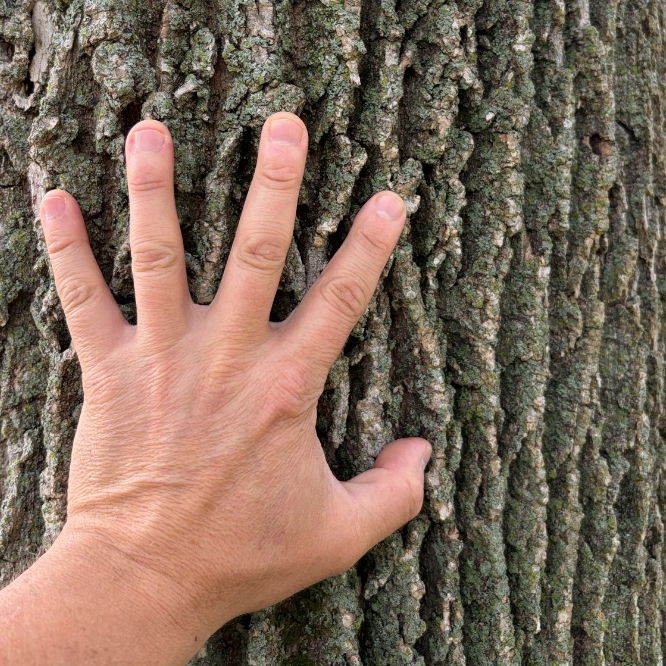
A hand laid flat against the diamond-furrowed bark of a white ash
Bark
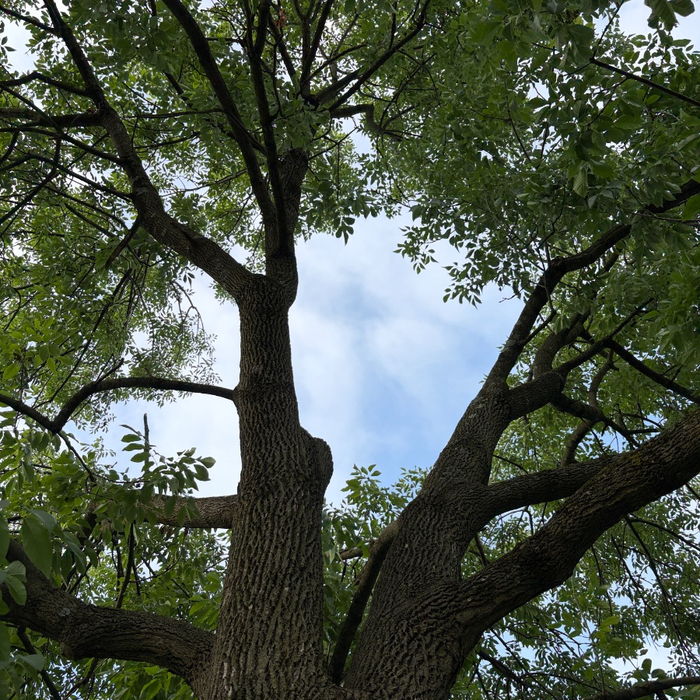
Looking straight up the trunk of a white ash into its crown, sky through the leaves
Crown

Photos every visit, lab results, my notes — yours to keep, even if you sell. I’m an arborist who also writes software, and I built ArbKeep for my own practice. Every client gets their own login, free, from the first visit.

Every property — a map

Your landscape, pinned

Illustration

Every tree and shrub numbered and placed. Walk your yard with the map in hand.

Every neighborhood — watched

What’s growing next door matters

A mimosa two doors down is a nursery for mimosa webworm — and honeylocust is the next stop.

The junipers on a street carry the rust that turns up on apples and crabapples a block later.

I work these streets. I see the pressure coming before it reaches your yard.

The work, documented

Before, after, and why.

Pin oak leaves in advanced interveinal chlorosis — pale blades, dark green veins, scorched margins
Pin oak in chlorosis — pale blade, green veins, burnt margins
A cut oak twig held in a gloved hand, cross-section up: green cambium ring, pale wood, a rust stain at the center
A twig, cut and read — the cambium says what the canopy won’t
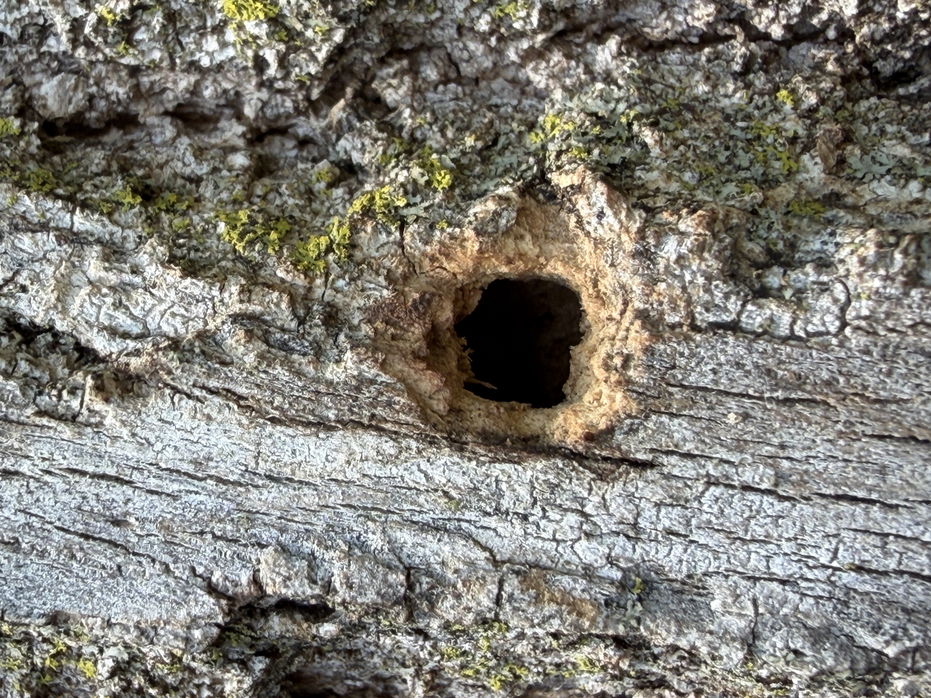
Woodpecker excavation punched through blonded, lichen-covered white ash bark
White ash — where a woodpecker dug in after the borers
Inside the base of a mature multi-stem evergreen shrub — interior stems radiating over clean needle litter
Inside a shrub — where air and light have to get back in
An excavated root flare: pale trunk widening into buttress roots, soil pulled back to the grass line
Root flare, uncovered and breathing
An Ohio State C-FAES plant and pest diagnostic report, showing the diagnosis and the final report narrative
The lab’s own words — Ohio State’s diagnostic report
@uatreeco — the field feed →
Everything I do

One arborist. The whole landscape.

I study your property.

Not a menu of services — I read the soil, the pests working it right now, and the way each tree is built, then do what that tree needs. Everything below is in service of that.

Also on the truckRoot management & air-spade root-zone work · Hedge & shrub care · Tree grafting & propagation · Pre-purchase tree inspection · Arborist reports & documentation · Consultations

Same work, other namesFertilization & Soil Care · Diagnostics & Lab Analysis · Pest & Disease Treatment · Tree Health Assessment · Ornamental Tree Care · Tree Pruning & Trimming · Fruit Tree Pruning & Care · Storm Cleanup

Paying a national company for injections or tree & shrub care? Text me a photo of last year’s invoice. On the commodity work — injections, tree & shrub programs — I’ll beat it on comparable scope, and your trees get local eyes year-round instead of a truck on a schedule.

Send the invoice
Free Estimate

Tell me about your trees.

No obligation. I’ll get back to you quickly. Rather not type? The number’s at the bottom.

I respond same day. No obligation.

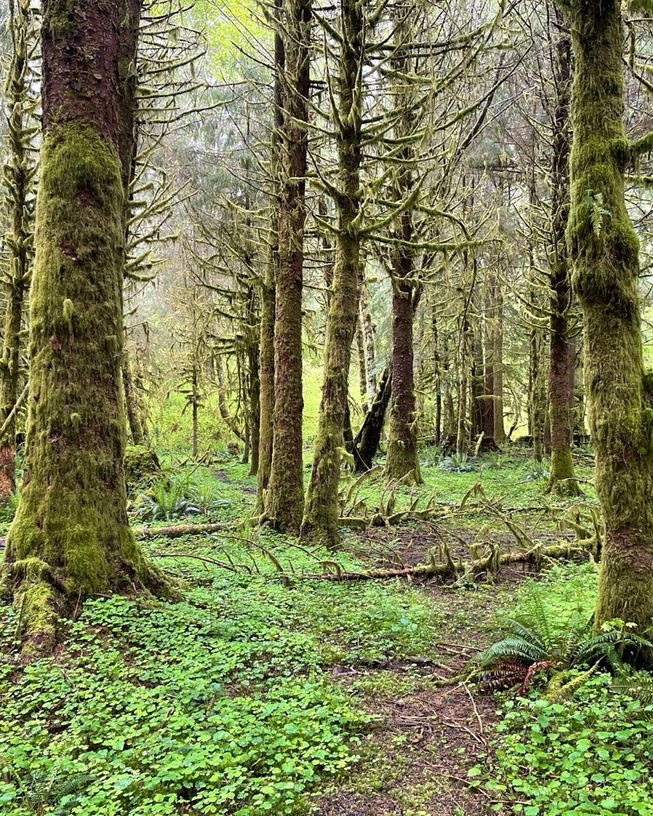
Old-growth conifer stand with moss-sleeved trunks, oxalis and sword fern on the forest floor
Old growth on the Olympic Peninsula — where I learned the woods
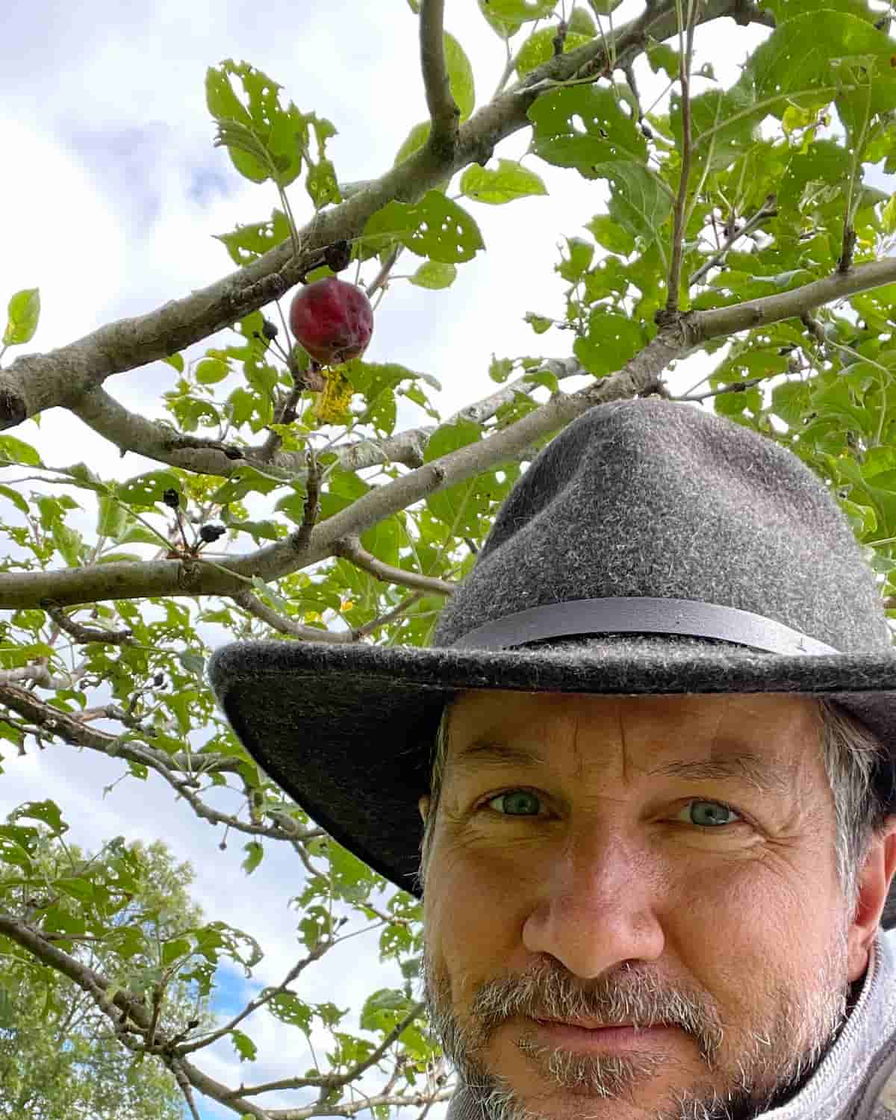
David All — Upper Arlington Tree Co. — in a felt hat beneath an apple branch in the family orchard
Our family’s heritage apple orchard, Central Pennsylvania
About David

Old growth, then the orchard, then home.

I grew up under one of the tallest oak canopies in the city — Chester, Henthorn, Ashmore — with roots here going back four generations, and I’m UA ’97. Walking past the ancient oaks on Jones and Barrington is what made the assignment obvious: keep them standing.

During COVID I left California’s most iconic city with no destination in mind. I’d heard there was a rain forest in America and couldn’t quite believe it — I had to go see. I ended up living on a family-trust old-growth preserve on the Sol Duc River in Beaver, Washington, along one of the last wild runs of coho and steelhead. I thought I’d learn to fish. Instead I learned the cycle of the fish, and how you restore and steward a natal creek — from two brothers, both veterans, who no longer see eye to eye politically but who grew up on that land and share one purpose: the forest, the river, and everything living off them.

I learned to fell big timber in Forks, Washington — not from a manual, but from Jerry Lapel. I also watched clear-cutting up close, and nothing I’ve witnessed has broken my heart like it. What I carried out wasn’t about the cut itself; it was about what happens next door — every tree left standing that had depended on the forest around it. That, and a permanent respect for the saw. Out here in the city I rarely see a man wearing eye protection, let alone chaps. I’ve seen the saw kick enough times to know safety matters.

Safety matters — but preservation comes first.

From the forest I went to our family’s heritage apple orchard in Central Pennsylvania — the opposite discipline. An orchardist is a farmer, not a city tree company. We walked those rows every night, and grew organically, by hand, because that’s what it takes when the fruit is the whole point. Orchard trees are Olympic athletes: pushed to the edge of what a tree can do, and they only perform if somebody is paying attention every week of the year.

What I’m studying now through the Ohio Chapter of the ISA isn’t how to be a better orchardist. It’s the frameworks: tree risk assessment, tree appraisal, and the ANSI standards as they’re actually practiced. My path here is non-traditional — student and apprentice, learning at the hands of masters.

I’m in Upper Arlington because my dad passed and named me to settle his estate. It brought me home. I stayed, and I look after this canopy the way I was taught to look after those rows.

Ohio Commercial Pesticide Applicator — License No. 175653
Member, Ohio Chapter ISA

BoutiqueArborist-ledFarmer’s rhythmMember, Ohio Chapter ISAHome for good
The whole story →
Fair questions

Tree service in Upper Arlington — asked and answered.

Do you offer tree service in Upper Arlington, Ohio?

Yes — tree service is all I do, and Upper Arlington, Ohio is the only place I do it. I'm a solo arborist based right here in UA: pruning and tree trimming, crown work, tree health assessments, wound care, young-tree training, and storm response — my own hands on the tree work itself, never a subcontracted crew doing the diagnosis. Removals I spec myself and run with a crew I trust. Working one suburb is how I actually know the canopy.

What does tree service cost in Upper Arlington?

It depends on the tree and the work — a single pruning visit is priced per job after I see it, and there's no charge for the assessment. For ongoing care there are two programs, priced right on the site, both by canopy size: the Soil & Nutrition Program starts at $449/year — two lab-spec'd feedings and a winter report, at $449 up to 5 trees, $649 for 6–12, and $899 for 13–20 — and the full Tree Steward program starts at $999/year and includes it, at $999 up to 5 trees, $1,249 for 6–12, and $1,499 for 13–20. Bands count trees — shrubs and ornamentals are tended per job, not counted. Larger canopies are quoted personally after a walk. Text or call and I'll get back to you quickly with an honest estimate.

Do you do tree trimming and pruning?

Yes. Tree trimming and structural pruning are the core of the work — deadwood removal, crown reduction and shaping, and formative pruning on young trees, done with hand tools first and cuts made at the branch collar so the tree can seal them properly.

Do you handle tree removal?

Yes. When a tree genuinely has to come down I'll tell you straight, spec the job, and my crew takes it down right — priced fairly, no drama. And you get what a removal-only company can't offer: arborist's eyes on the tree as it comes down. I examine every branch and cavity to determine the cause of failure, and what that tree teaches goes into the chart for every other tree on your property.

Are you a licensed, insured tree service?

Yes. Ohio Commercial Pesticide Applicator License No. 175653, member of the Ohio Chapter ISA, and fully insured. And you never have to ask for proof — every client's ArbKeep portal has my licenses and Certificate of Insurance right there to download as a PDF, alongside the photos and findings for each tree on your property.

Can't my landscaper or lawn service take care of my trees?

Their trade is turf, and turf logic applied to a hundred-year organism is how trees die slowly around here. The business runs on efficiency — mow it fast, move to the next one — and that means a 1,500-pound riding mower swung around your trunk every week. Every pass scuffs bark and crushes the surface roots that sit in the top few inches of soil doing most of the tree's breathing and drinking. It isn't one dramatic wound; it's chronic injury on a weekly schedule, plus a string trimmer at the flare and a mulch volcano on top. Mechanical damage like that is one of the leading causes of death in landscape trees, and nobody ever connects it to the decline they call me about five years later.

Then there's the chemistry: the broadleaf weed killer that keeps a lawn clean is designed to kill broadleaf plants — and your tree is the biggest broadleaf plant on the property, with roots running out under that entire lawn.

And I'll say the quiet part: in Upper Arlington, grass is the number one invasive species. We irrigate it, feed it, poison for it, and run engines over it all summer — all to maintain a monoculture that competes with the roots of the canopy that actually makes this neighborhood worth living in.

Why does a well-sited tree need so little from me?

Because it's already running the best soil program on your property. A tree sends a large share of the sugar it makes down to its roots and releases it into the soil — deliberately — to feed the fungi and bacteria that in turn hand back water and nutrients it can't reach alone. Put the right species on the right soil and that engine largely runs itself, and the ground gets richer every year. My job is mostly to protect that engine: keep the flare open, keep the root zone from being compacted and poisoned, and correct the one or two things the lab says are actually missing. Most of what I do is subtraction.

Is your fertilization organic?

Mine is measured — that's a different and better question, and I say that as someone who grew fruit organically by hand on our family's orchard. I'm not squeamish about the materials; I've spread them. Organic tree & shrub care usually means composted poultry litter, blood or feather meal, fish emulsion, or a brewed microbial tea. Those are real materials with real uses. Here's the problem on a mature landscape: they're mostly nitrogen and phosphorus, and that is rarely what an Upper Arlington tree is short of.

Nitrogen pushes fast, soft, succulent growth — exactly what aphids, scale, and borers prefer, and growth the tree funds by spending down its own defenses. Phosphorus is worse, because our suburban soils are already loaded with decades of it, and surplus phosphorus suppresses the mycorrhizal fungi your tree is feeding on purpose — you pay to weaken the engine described above, and the excess runs off toward the Scioto and, eventually, Lake Erie. Manure also carries soluble salts into a root zone that didn't ask for them, and none of it touches the actual limiting factor here: our high-pH, lime-buffered ground locks up iron and manganese, and no amount of chicken litter unlocks it.

So who do I trust? University agricultural labs — the soil scientists at land-grant schools who run the panel, report the chemistry, and have nothing whatsoever to sell you. No product line, no program, no upsell. Just your numbers.

Then I do the part nobody else here is doing: I read those panels property by property, across our neck of the woods, and hold them against what the trees are actually doing in the ground. Your yard isn't a region or an average — it has its own chemistry, and the pattern only shows up if somebody is sampling the same few square miles over and over. What's genuinely limiting in Upper Arlington soil is specific, it's local, and it is almost never the nitrogen in a bag of manure. You don't learn that from a label. You learn it from a lab, and then from doing this on the next street over, and the next.

Do you treat Emerald Ash Borer?

Yes — trunk injection on a multi-year cycle. An untreated ash in central Ohio is a tree on a timer; a treated one can outlive the outbreak.
Featured in The Guardian on spotted lanternfly — “It might be a little messy, but it will save your tree.” Read the field guide →

Upper Arlington, Ohio only · Tree City USA since 1990. The neighborhoods, the canopy & the annexation map →

No pressure — I’ll be in touch

Text me. I’ll walk your yard.

Text David →
(614) 312-2979

The lab tells us both what’s true.

Text David Call